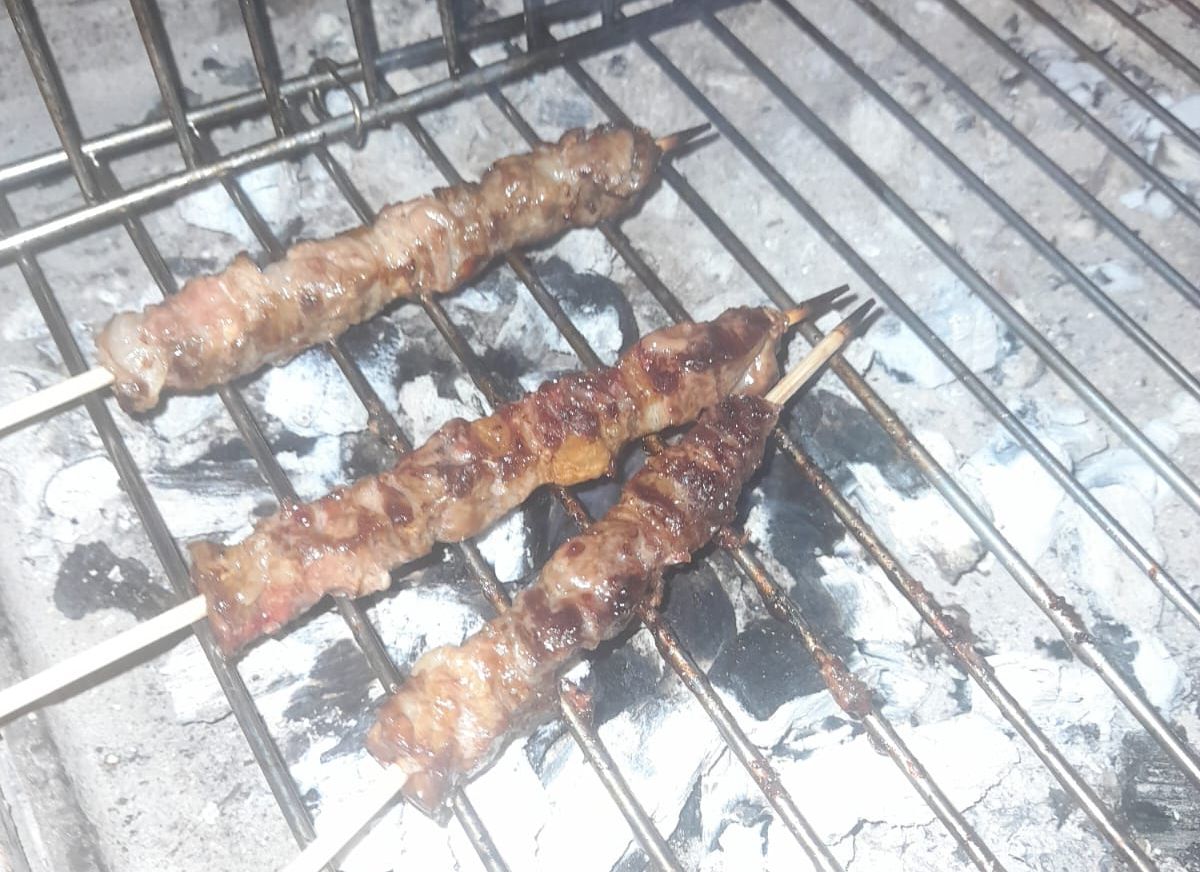
Berlin, Germany (Gastrosofie). Connoisseurs and critics, culinary experts and gastrosophers around the world appreciate this speciality from Abruzzo: Arrosticini Abruzzesi. Local heroes at the stoves of the coast, hinterland and mountains of the Apennine Peninsula love these lamb skewers just as much. Anyone who has eaten this meat grilled over the embers of an extinguished fire or on charcoal at least once, and not just at Easter, waits for the sheep to be slaughtered year after year like Christians wait week after week for old fairy tales about resurrections, water wanderings, virgin births and whatever else the clergy has to offer.
There is no question that in the olden days there were lots of sheep and lambs at Easter, not only in Abruzzo, but also along the entire 1,500-kilometre-long Apennines and not only in the Abruzzo Apennines, known in Italian as Appennino abruzzese. And there is no question that the cuisine of Abruzzo could not be more diverse, as the dishes range from the sea to the mountains. In Abruzzo cuisine, there is talk of ‘Mare e Monti’ (sea and mountains). Soups and stews are not the exception, but the rule. Seafood and legumes are also combined for this purpose.
For Arrosticini Abruzzesi, lamb meat is selected, naturally from pasture-raised lamb, cut into cubes and skewered. Traditionally, the lamb skewers are grilled on a ‘fornacella’, but glowing coals from a wood-fired fire pit work just as well and offer the best barbecue flavour.
Pieces of tender meat with fat that are all the same size ensure even cooking when grilling. Depending on the size of the pieces, the lamb skewers need to cook for five to ten minutes. Take your time when eating.