Berlin, Germany (Gastrosofie). Rioja: a traditional, well-known wine growing area in northern Spain. With now 60.000 acres on both sides of the Ebro and along the southern foothills of the Cantabrian Mountains. Divided into three: Rioja Alta and Rioja Baja – mainly in the Region of La Rioja, and Rioja Alavesa in Alavesa, a province of the Basque Autonomous Community. 600 wineries (bodegas) supplied by 13.000 farmers produce wines: 75% red, rosé and increasingly white. Of considerable value: 1500 million euros a year, 40% of Spain’s wine industry.
On their way to Santiago de Compostela, pilgrims since the Middle Ages have enjoyed Rioja. When Phylloxera ravaged the vineyards in the 19th century, many farmers came across the Pyrenees and gave the industry a boost. Then, in June 1925, a royal decree by Alfonso XIII established the first designation of origin „D.O.“ or „Denominación de Origen“ aiming to protect the defined production zone. (Rioja received the first „D.O.Ca.“ or „Denominación de Origen Calificada“in 1991.) A corresponding seal guarantees the authenticity of each individual bottle.
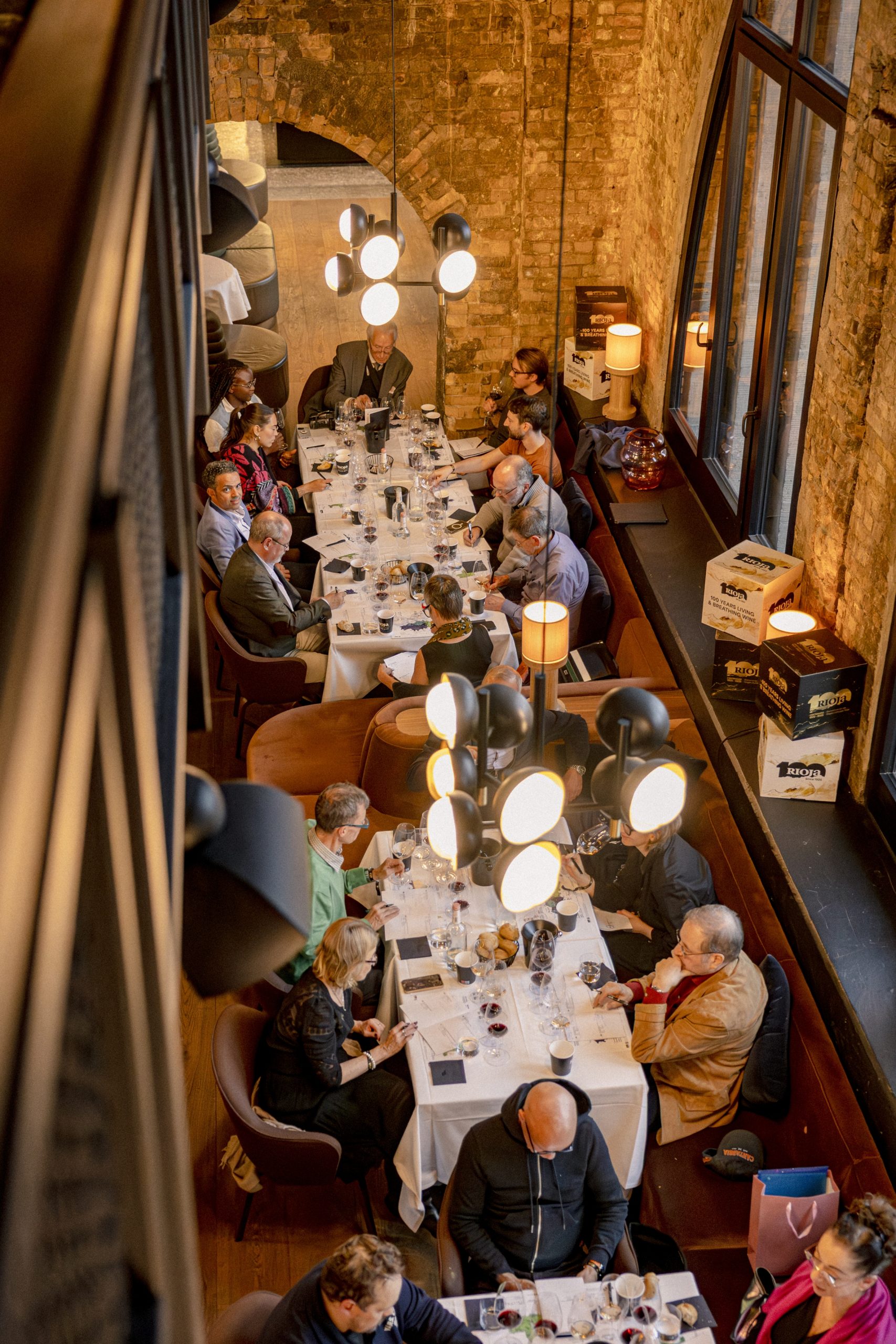
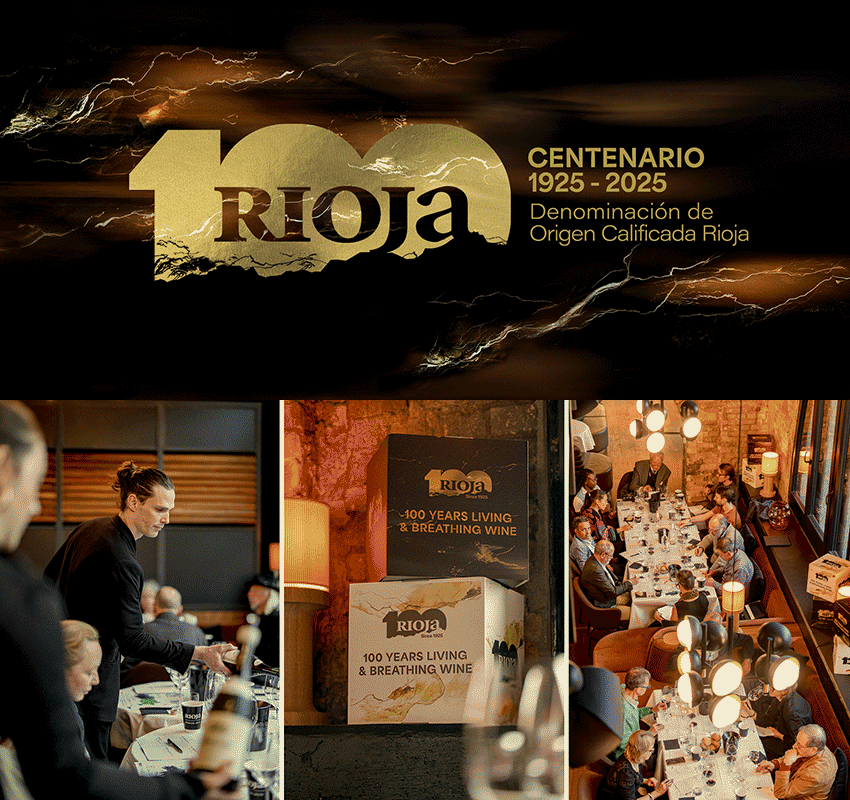
The theme of the program of activities carried out this year is: „100 años viviendo el vino“. June 5 marks the exact date, and one of the highlights in Rioja was the gala dinner at Marqués de Riscal. Over 30 activities were staged around the world for „100 years of living wine“ – with a budget of 1.000000 euros. Of course Berlin wanted to be part in the fun, as Closing Party of its Food Week. The „Veronika“ was used as a setting. Invited guests were able to taste more than 40 wines. From red, white and rosé to sparkling, mature classics and exciting Einzellagen, the full potential of the region was on display.
A flying buffet with a variety of tapas provided a bit of a bite. In addition to Spanish classics such as chorizo in red wine sauce with rice, there were also Asian-inspired specialities such as vegetable tempura with cauliflower dip. A charcuteria with jamón and salchichón was also a must.
What goes well with ham and sausage? Well, says Fritz the connoisseur, you can’t go wrong with the 2017 „Campo Viejo Gran Reserva“from Rioja Alta. Made from Tempranillo, Graciano and Mazuelo grapes. Complex, with fine tannins and notes of plums and blueberries. I had to agree, but also enjoyed the 2016 „Viña Bujanda Gran Reserva“, aged 24 months in barrel and 39 months in bottle, that reflects the best image of the Tempranillo variety from their vineyards in Rioja Alta and Rioja Alavesa. Certainly wines of the Marques de Riscal brand are top in Basque Rioja – soon tasted on site for Gastrosofie.